
Growing Beef Newsletter
April 2026, Volume 16, Issue 10
Heifer development
Randie Culbertson, Cow-Calf Extension Specialist, Iowa State University Extension and Outreach
A heifer's ability to become pregnant, calve, and rebreed has long-term consequences for the financial success of any cow-calf operation. Proper development sets heifers up for a lifetime of productivity in the herd.
Puberty and early breeding
For a heifer to calve as a 2-year-old, she must reach puberty and conceive between 12 and 15 months of age. Conception rates increase by approximately 21% from the first to the third estrous cycle, so getting heifers cycling early matters. Heifers born earlier in the calving season have a natural advantage since they are older, reach puberty sooner, and tend to conceive earlier. Early-conceiving heifers also have heavier weaning weights, greater lifetime production, and higher rebreeding rates as 2-year-olds.
Nutrition
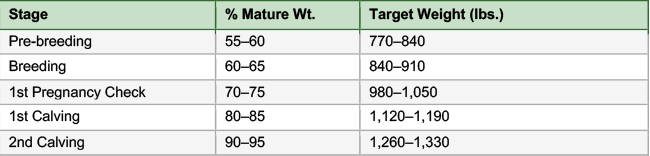
Meeting nutritional requirements is the foundation of heifer development. Heifers partition nutrients toward growth before cycling, so underfeeding delays puberty and impairs reproduction. Traditional guidelines target 60–65% of expected mature body weight by breeding, although some research suggests 55–57% may be sufficient without sacrificing performance.
Overfeeding is equally problematic. Overdeveloped heifers can experience suppressed estrus, reduced conception rates, embryonic mortality, and poor mammary development ("fatty udder"). The goal is balance for adequate condition without excess. Aiming for a body condition scores (BCS) of 5 or 6 will ensure your heifers are at an adequate weight at time of breeding.
Target weights based on a 1,400 lb. mature cow:
Breed heifers early
Breed heifers 3 to 4 weeks ahead of the mature cow herd. This keeps calving distribution tight, lets you focus labor on heifers before the main herd calves, and gives first-calf heifers extra recovery time before rebreeding. Because heifers are still growing at calving, they need more time post-calving to resume cycling and early breeding helps them stay on track for the following season.
Reducing calving difficulty
Three strategies help minimize dystocia: (1) Meet target weights — adequately grown heifers have fewer calving problems. (2) Select calving ease bulls — EPDs for calving ease are a reliable tool for reducing difficult births. (3) Use pelvic measurements — measure heifers and cull those in the bottom 10%. Pelvic measurements are a culling tool, not a selection criterion.
The bottom line
Your heifers are the next generation of your cow herd. Developing them with the right nutrition, timing, and management strategies pays dividends for years. Give them the conditions they need to succeed.
This monthly newsletter is free and provides timely information on topics that matter most to Iowa beef producers. You’re welcome to use information and articles from the newsletter - simply credit Iowa Beef Center.



