
Growing Beef Newsletter
January 2026, Volume 16, Issue 7
Bull care in the winter so they work in the summer
Beth Reynolds, ISU Extension and Outreach program specialist
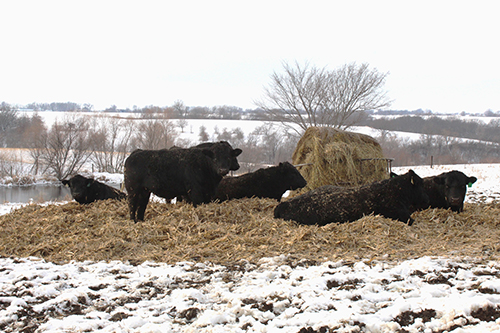 Owning bulls during the idle months is not all sunshine and rainbows. Broken fence, beat up hay rings, injuries from fighting …. And all that comes with bored boys - I mean bulls - in the winter. However, bull management must be held to high standards in order to get a good return on your investment, because quality bulls are not cheap. Winter management puts a large emphasis on periods of cold stress and temperature fluctuation. The negative impacts of poor winter management are broad, but two general categories are nutritional and breeding soundness.
Negative nutritional impacts
The first obvious impact of cold stress without adjusting for nutritional needs is the loss of body condition. While there are consequences associated with semen quality when bulls carry too much fat, an underfed bull poses bigger issues. It’s important to assess the body condition of bulls often, and to maintain them as an athlete with adequate condition. This translates to a body condition score (BCS) of 5.5 to 6.5 on a 9-point scale needed prior to breeding season. Expect bulls to lose 100 to 200 pounds during the breeding season, which equates to a 1-to-2-point BCS loss, respectively. Underfed bulls are more prone to disease, poor libido, and lower quantity and quality sperm. Micronutrients and the mineral program in particular should not be overlooked if you expect a healthy, active bull to pass a BSE and perform well in the following breeding season. For example, zinc and selenium are essential for testicular function in addition to their importance for an effective immune response.
Negative breeding soundness impacts
Arguably, the most discussed negative impact of not managing cold stress in bulls is frostbite on the scrotum. Mild frostbite will set back normal sperm production for 45-60 days, and severe frostbite may cause permanent damage. Additionally, in periods of cold stress, a cortisol spike can be expected. Cortisol can transfer from the bloodstream to semen, and in vitro trials have observed negative effects on sperm quality, although I am not aware of live-animal studies that have replicated these effects. Cold weather and frozen ground can also strain bulls' hooves, making them prone to toe abscesses, foot rot, and other infections.
Producers in the Midwest should also be cautious if the primary fall and early winter feed source is pasture containing a significant portion of mature, unimproved fescue. Endotoxins found in Kentucky 31 fescue cause vasoconstriction, or reduced blood flow to the extremities. This will ultimately perpetuate any negative effects of cold stress at warmer temperatures than would be expected on other feed sources.
Multiple good articles have outlined general strategies to reduce the impact of cold weather on the cow herd like Caring for Cow Herds During Cold Weather, IBC0143. Most management strategies will revolve around a few common areas: 1) Providing windbreaks; 2) Providing bedding; and 3) Providing adequate and strategic nutrition. For the sake of this discussion, we’ll only touch on a couple of strategies.
Managing the nutritional impacts of cold weather on herd sires will look very similar to nutritional adjustments needed for the gestating cow herd. The general thumb rule for cold stress still applies: for every degree that the temperature is below the lower critical temperature, energy needs increase by 1%. The lower critical temperature for a dry winter hair coat on cattle in good (5-6) body condition is around 20 degrees F. Cold stress for brief or extended periods increases energy requirements while protein, mineral, and vitamin needs remain consistent. If adequate forage is available, bulls will increase their dry matter intake during periods of cold stress. Depending on hay quality, this could perpetuate the problem of needing more energy in the diet. In cold-stress scenarios, supplemental grains high in energy can be extremely effective for bulls on high-forage diets. Utilize the offseason to bring bulls back into good condition after the breeding season and allow plenty of time and space for them to recover from any immune system strains or physical injuries.
Managing the breeding soundness impacts of cold weather on herd sires requires being proactive and utilizing tools to mitigate frigid temperatures. Windbreaks are very impactful in mitigating cold stress effects. Bedding is especially important to create a barrier, keep the scrotum off the frozen ground to prevent frostbite, and help alleviate the increased nutritional needs. A feedlot trial from South Dakota State University found that providing 4 lb. of bedding per head per day reduced energy maintenance requirements by 20-40% compared to unbedded counterparts on cement. While less research has been done on breeding stock to quantify changes, one would expect that providing bedding would also reduce maintenance requirements for bulls and cows during cold-stress periods. Reduce stress in general by ensuring commingled bulls have adequate room to reduce fighting. This goes beyond providing space for bulls to “get away” and roam; it includes providing enough space at the feed bunk or hay ring, as well as a larger area for bedding down to reduce fighting when active, eating, and resting. To promote hoof health, be diligent in maintaining pens in the warm spells when uneven ground and manure can be addressed. Even if all available cold-stress prevention strategies are used, follow up with your veterinarian to schedule breeding soundness exams. A close-up examination is needed to catch some physical injuries and sperm abnormalities, even after the best off-season management. When scheduling, remember that sperm production takes about 60 days. Although some bulls may go from a failed to a passing BSE if rechecked, a plan B likely requires purchasing another bull, and bull sale season is underway.
Moral of the story - don’t forget about herd sires in the winter months or in the spring when calving season is in full swing. Wishing you a successful breeding season in 2026!
This monthly newsletter is free and provides timely information on topics that matter most to Iowa beef producers. You’re welcome to use information and articles from the newsletter - simply credit Iowa Beef Center.



