
Growing Beef Newsletter
May 2026, Volume 16, Issue 11
Sorghum silage as an Alternative to Corn Silage in High Pest Pressure Areas
Shelby Gruss, ISU Extension forage specialist
Tar spot has become one of the most concerning foliar diseases impacting corn silage production across Iowa and the Midwest. The disease, caused by Phyllachora maydis, has now been identified in every county in Iowa and can spread rapidly under cool, wet conditions. For silage producers, tar spot is especially concerning because it can cause early plant dry down, reduced yields, and lower sugar content, all of which negatively impact silage fermentation and feed quality. Poor fermentation can ultimately reduce forage value and animal performance, leaving many producers increasingly reliant on fungicides to protect corn silage acres.
This study evaluated forage sorghum silage as an alternative to corn silage in high disease pressure environments. Unlike corn, sorghum is not susceptible to tar spot. The project compared several sorghum silage hybrids with corn silage hybrids under different fungicide management strategies, including preventative sprays (spray at R0), reactive sprays (when tar spot was identified), and untreated controls. The sorghum hybrids, forage sorghum grain producing (SC), forage sorghum male sterile bmr (SM), and sorghum-sudangrass bmr photoperiod sensitive (SB), were selected to capture the variation in sorghums on the market. The SM will produce a head, but will not produce grain in the absence of external pollen, and the SB will remain in vegetative growth in our environment. The study was conducted during 2024 and 2025 at multiple Iowa State research farms. In 2025 there was high disease pressure of southern rust at both locations; sorghum also does not get southern rust.
Researchers evaluated dry matter yield, moisture, sugar concentration (Brix), crude protein, starch, and digestibility. Tar spot was confirmed during both growing seasons, while Southern rust pressure was also severe in 2025.
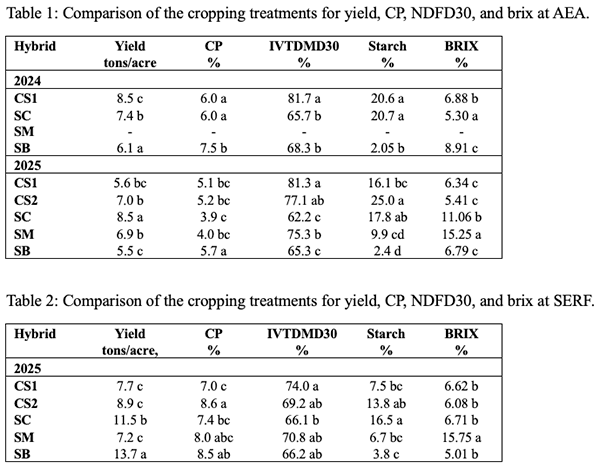
Results showed that forage sorghum performed competitively with corn silage in both yield and forage quality. In 2024, the corn silage hybrid produced the highest dry matter yield at 8.5 tons/acre, although the grain-type sorghum was relatively close at 7.4 tons/acre. In 2025, the sorghum hybrids often matched or exceeded corn silage yields depending on location. At the Southeast Research Farm (SERF), the forage sorghum male sterile hybrid (SB) produced the greatest yield at 13.7 tons/acre, while the grain-type forage sorghum yielded 11.5 tons/acre.
Sugar concentration is critical for proper silage fermentation because it fuels lactic acid production and helps preserve the forage. Corn silage showed major reductions in Brix levels when fungicides were not applied. In some cases, sugar concentrations dropped by more than one-third under unsprayed conditions. In contrast, sorghum sugar levels remained relatively stable regardless of fungicide treatment because tar spot does not infect sorghum. The male sterile sorghum hybrid consistently had the highest Brix values across locations, potentially helping compensate for its lower starch concentration.
Nutritive value varied among hybrids. Corn silage generally maintained greater digestibility and starch content, while sorghum-sudangrass hybrids tended to have higher fiber concentrations due to greater vegetative growth. However, overall forage quality from the sorghum hybrids remained acceptable for silage production.
Overall, this research demonstrates that forage sorghum can serve as a viable silage alternative in areas facing heavy tar spot pressure. While corn silage continues to provide excellent feed quality, integrating sorghum silage into forage systems may help producers reduce risk and maintain forage production during years with severe disease outbreaks.
Table 1: Comparison of the cropping treatments for yield, CP, NDFD30, and brix at AEA.
This monthly newsletter is free and provides timely information on topics that matter most to Iowa beef producers. You’re welcome to use information and articles from the newsletter - simply credit Iowa Beef Center.



