
Growing Beef Newsletter
September 2026, Volume 17, Issue 3
What is preconditioning and why is it valuable?
Chris Clark, ISU beef specialist
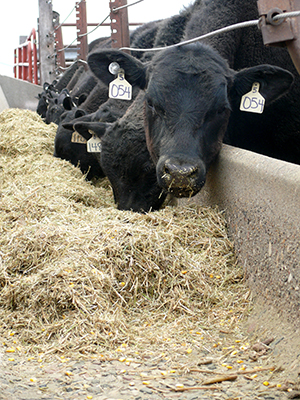 Fall is almost here which means it will soon be time to process, wean and market spring-born calves. In preparation for marketing, many producers do some level of preconditioning to add value and prepare calves for the next phase of production. But what exactly is preconditioning and why is it valuable? There often seems to be some confusion or inconsistency about what the term really means and definitions may vary regionally and across programs. Therefore, it is wise to communicate clearly, explain completely, ask a lot of questions, etc. when discussing as a potential buyer or seller, how cattle have been managed and processed.
I think of preconditioning simply as a set of practices and procedures applied to prepare cattle for the next phase of production. Common practices and procedures include castration and dehorning, vaccination, adaptation to new feeds, bunk breaking, weaning, etc. The tricky part is that not everyone does all of those things before describing the cattle as preconditioned. One producer may castrate, dehorn, vaccinate and deworm and in his/her mind, those cattle may be preconditioned. Another producer may not consider cattle preconditioned unless they have been weaned for 30-60 days in addition to all of the previously mentioned practices and procedures. Additional details are critical as well. What vaccines were administered? How old were calves at the time of vaccination? How long prior to weaning were calves vaccinated? Etc. I sometimes think of preconditioning on a scale or spectrum with different levels of preconditioning resulting from various levels of management. However, in the state of Iowa, the term preconditioning can be more well-defined.
In the state of Iowa, we have a sanctioned preconditioning (PC) program administered by the Iowa Veterinary Medical Association (IVMA) and cosponsored by the Iowa Cattlemen’s Association. The program is sometimes called the Iowa Green Tag / Gold Tag program in reference to the official tags that are placed in the calves’ ears. A program green tag placed in the left ear indicates that:
- Calf was vaccinated with all required program vaccines
- Vaccines were properly handled and administered by BQA guidelines by an Iowa-licensed and IVMA-member veterinarian
- Calf was treated with required external/internal parasite treatment
- The calf was at least 4 months of age when it was processed for preconditioning
- Veterinarian has verified the animal was properly dehorned and castrated
These green-tagged calves, however, are not considered "preconditioned" unless they have been weaned for 30 days and are accompanied by a valid Iowa Green Tag Preconditioning Certificate. For obvious logistical reasons, green tags are often placed at the time of processing. Calves may or may not then be weaned prior to marketing. Producers may opt not to wean or may decide to sell before the full 30-day weaning period has passed. They might even wean for the full 30 days but neglect to pick up and complete the preconditioning certificate. Some people use the terms “green-tagged” and “preconditioned” interchangeably, but it is important to recognize that green-tagged calves are not necessarily preconditioned. To be fully preconditioned according to the Iowa program, they must have been weaned for 30 days and accompanied by an official Preconditioning Certificate that has been properly completed.
The Gold Tag program is very similar but requires cattle to receive appropriate boosters of required vaccines and to be weaned for 60 days. Gold-tagged cattle may have a green and a gold tag in the left ear or just a gold tag. If cattle are green-tagged and processed a second time to complete the gold tag program, the gold tags are applied in addition to the green tags. If a producer definitively plans to gold-tag calves, he/she may forego the green tag and have the veterinarian apply just the gold tag at the second processing. Again, gold-tagged cattle are not considered fully gold tag preconditioned unless they have been weaned for 60 days and are accompanied by a valid official Iowa Gold Tag Preconditioning Certificate.
The concept is extremely simple but obviously, the details and definitions can get a little complicated. Whether with veterinarians, auction barn representatives, potential buyers, sellers, etc., effective communication is critical to ensure everyone understands how cattle have been managed and processed.
The idea of preconditioning is to prepare cattle by performing surgeries early, stimulating immunity, reducing parasite burdens, adapting to new feeds and feeding styles, and helping them navigate through the stress and shrink associated with some of these practices so that they are ready to go on feed and perform at their next stop. Although most preconditioning practices are associated with weaning, some of these things, such as castration and dehorning, can be done well ahead of time, even in the neonatal period of a calf’s life. Whether or not you participate in an official, sponsored preconditioning program, the principles of preconditioning are useful. Below are descriptions of some specific components of a strong preconditioning program and why they are valuable.
- Castration and dehorning procedures should be done as early as possible with appropriate anesthesia and analgesia to minimize pain and distress. Hopefully, castration and dehorning procedures are done by now. Castration and dehorning surgeries should generally be performed within the first 2-3 months of life. Dehorning should be done through genetic selection or through disbudding calves before the horns become well-established. If these procedures have not yet been done, talk to your veterinarian about best timing and technique. Open wounds can be a problem in the summer because of fly pressure, so it is worth some thought and discussion about how to best proceed at this time of year. The general idea is to complete these surgical procedures prior to weaning so that cattle have been through the associated stress before they experience the stress of weaning and marketing and thus are not challenged with multiple stressors at one time.
- Vaccines are administered to establish immunity prior to the stress of weaning and marketing. Stress associated with weaning and marketing can cause immunosuppression, making animals more susceptible to respiratory disease and other infections. Pre-weaning vaccines help to ensure that protective antibodies are on board at weaning, which can help to prevent and reduce severity of disease. Proper vaccine handling, administration and timing are critical for successful immunization. Work with your veterinarian to determine the products and vaccine schedules that make the most sense for your operation.
- Deworming to reduce internal and external parasite load can help promote animal health and performance. Cattle commonly consume infective nematode larvae while grazing so strategic deworming as they are coming off of pasture into drylot or feedyard settings can make sense.
- Implanting with growth promoting hormone implants is an optional part of a preconditioning program. Implants improve performance and feed efficiency and can improve profitability when cattle are retained long enough to take advantage of these improvements. Keep in mind the new FDA guidance and emphasis on not reimplanting within a phase of production unless the implant product is specifically labeled for reimplantation. With this in mind, some buyers may prefer cattle that have not been implanted so it may be worth thinking through the value of enhanced performance versus buyer preferences and demand at market.
- Adapt cattle to feed like what will be fed after weaning. Creep feeding or supplementation can help calves adapt to new feeds and feeding systems. This should support a smoother transition throughout weaning. Post-weaning feeding programs should be well-balanced to support health and growth but modest enough to prevent foot and rumen issues and over-conditioning of animals. Buyers generally like cattle to be relatively ‘green’, meaning they prefer to buy cattle that are not overly fat.
- Weaning is considered by some to be an integral part of the preconditioning process. In fact, in some sponsored preconditioning programs, cattle are not truly preconditioned if not weaned for 30-60 days. Weaning allows producers to start cattle on feed, adapt them to the next phase of production and treat any illnesses that may occur. Consider low-stress weaning strategies such as two-step weaning, fence-line weaning, pasture weaning, etc. and think ahead about what might work for you.
- Strive for excellence in the basics of animal husbandry. Shelter, shade, bedding, water, feed, low-stress handling, etc. are all components of good animal care and the most well-preconditioned animals are those that have been well cared for from conception to marketing.
- Daily care and record keeping are key components of preconditioning. Create a plan for performing and keeping records of daily care and develop a record keeping system for treatment and feed records. Plan to check cattle daily throughout the weaning phase to look for signs of illness and develop a working relationship with a veterinarian and a treatment plan in case of illness. Review recommended biosecurity protocols and implement as appropriate to protect the health of your calf crop. Prepare records that can be shared with buyers so that they understand how cattle have been cared for, what products have been administered and what procedures have been done.
Whether you participate in an official, sponsored program or not, implementing components of a preconditioning program can enhance animal health, well-being and performance and increase the odds that cattle will perform to their genetic potential. Cow-calf producers should consider implementing at least components of a preconditioning program to add value and support the health and performance of their cattle in the next phase of production. Finally, everyone involved should strive to communicate effectively about how cattle have been managed and processed. Whether or not we use the term, "preconditioned," let’s be thorough and descriptive in how we represent cattle as they are marketed this upcoming sale season.
This monthly newsletter is free and provides timely information on topics that matter most to Iowa beef producers. You’re welcome to use information and articles from the newsletter - simply credit Iowa Beef Center.



